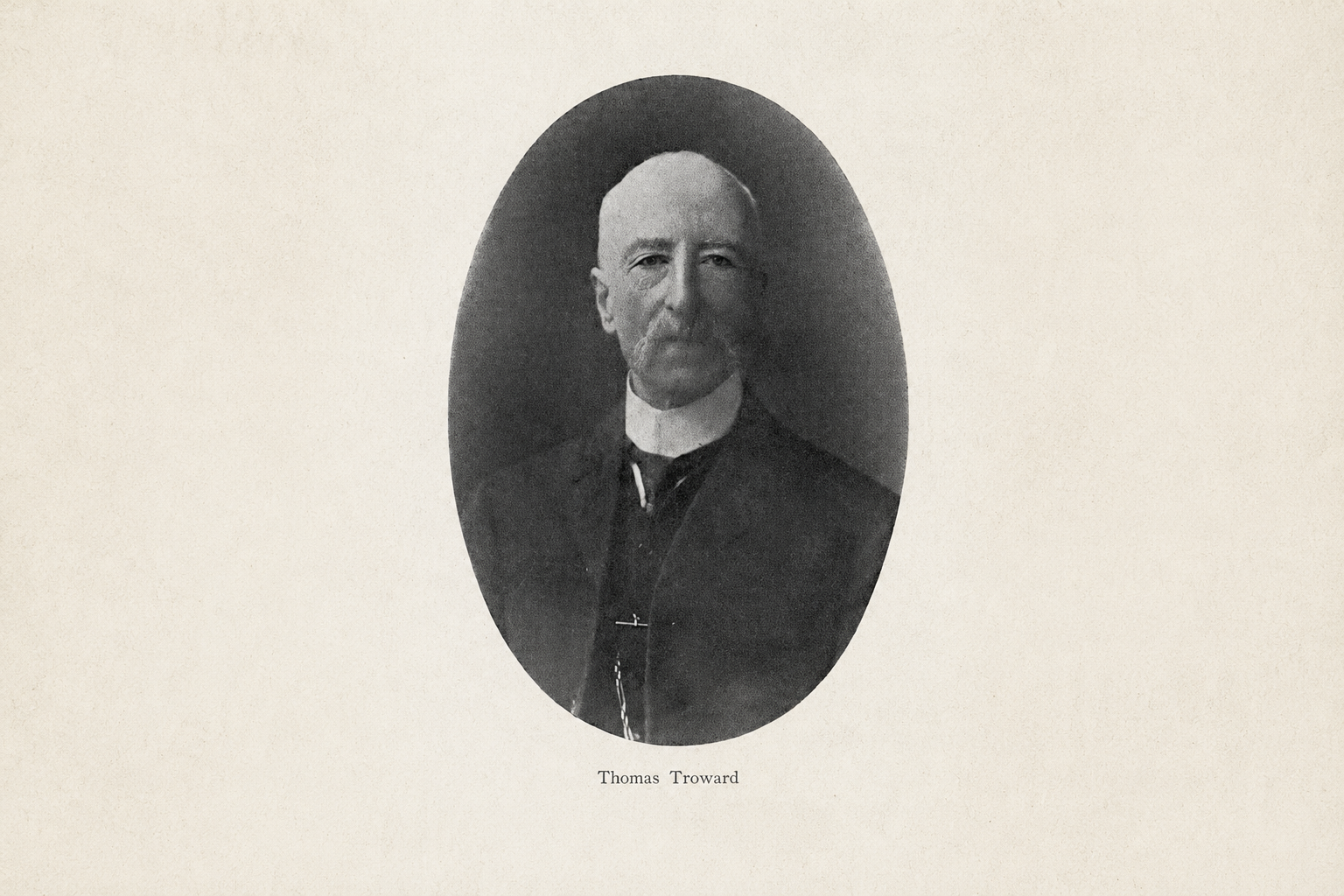
Thomas Troward was one of the most rigorous thinkers of the New Thought movement. Where other metaphysical writers often relied on revelation, poetry or religious exhortation, Troward tried to reason from first principles. His central question was deceptively simple: if mind is creative, what must be true about the nature of mind, the universe and the individual?
His answer begins with what he called Spirit. Spirit is life, consciousness and the originating power behind manifestation. It is not one force among other forces. It is First Cause: the principle from which all conditions proceed, but which is not itself produced by any prior condition.
Troward did not place that creative power somewhere outside the individual. Universal Spirit becomes particular without ceasing to be universal. It is therefore present in us as our own consciousness, initiative and power of selection.
The practical implication is substantial. Manifestation is not, in Troward’s philosophy, an attempt to persuade a distant power to change reality. It is the intelligent direction of the creative principle already operating through us.
Who Was Thomas Troward?
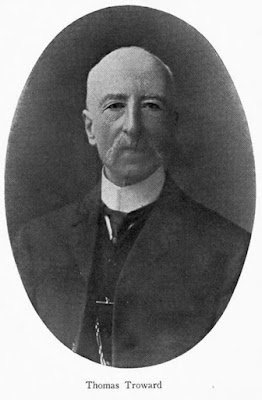
Thomas Troward was born in 1847 and spent much of his professional life in British India, where he served as a divisional judge. After retiring in 1896, he returned to England and devoted himself more fully to the study and exposition of mental science.
His legal background is visible in his writing. Troward does not merely announce conclusions; he constructs arguments. He defines terms, separates causes from conditions and follows each premise toward what he regards as its necessary consequence. Even when his subject is mystical, his method is almost judicial.
During his years in India, Troward studied Indian philosophy alongside the Bible and other religious traditions. He did not treat these texts primarily as historical records. He read them as symbolic statements of universal principles, especially the relation between the unconditioned source of life and its expression through the individual.
His best-known works include:
- The Edinburgh Lectures on Mental Science
- The Dore Lectures on Mental Science
- The Creative Process in the Individual
- The Law and the Word
- The Hidden Power and Other Papers Upon Mental Science
- Bible Mystery and Bible Meaning
William James reportedly described The Edinburgh Lectures on Mental Science as the clearest philosophical statement of its kind. Whether or not the modern reader agrees with all of Troward’s conclusions, the reason for his influence is easy to see: he gave New Thought a coherent metaphysical structure.
The Foundation of Thomas Troward’s Mental Science
Troward begins by distinguishing Spirit from matter.
Matter is characterized by form, limitation and relation. A physical object is what it is because it has definite properties and occupies a particular position relative to other objects. It behaves according to established conditions.
Spirit, by contrast, is living, intelligent and self-directive. Troward associates it with consciousness, initiative and selection. It does not merely react mechanically; it originates movement.
This distinction does not require us to dismiss the physical world as an illusion. Troward’s point is subtler. The material world is real as manifested condition, but it is not self-originating. It belongs to the domain of effects. Its forms depend upon a more fundamental activity that is not itself material.
He expresses the distinction in a compact formula:
“The absolute is the region of causes, and the relative is the region of conditions.”
The relative world is the world we ordinarily experience: bodies, events, distances, sequences and limitations. The absolute is not another object hidden somewhere within that world. It is the originating level from which the entire field of conditions proceeds.
This is the basis of Thomas Troward’s philosophy of manifestation. If we attempt to create solely by rearranging existing conditions, we remain confined to the level of effects. Mental science begins when thought learns to operate from the causal side.
Spirit as Consciousness and First Cause
The word spirit can sound vague because it is often used without definition. Troward connects it to the Latin spiro, “I breathe.” Spirit is the animating principle—the “breath” of life—but it is also more than biological vitality. It is the presence of awareness itself.
We experience thoughts, sensations, emotions and physical objects. Yet every experience presupposes consciousness: something by which the experience is known. Consciousness cannot be placed beside its own contents as though it were merely one more object among them. It is the condition under which any object can appear at all.
For Troward, this conscious principle is also creative. Spirit must be First Cause because an ultimate originating power cannot depend upon something anterior to itself:
“Spirit being First Cause there can be nothing anterior to dictate to it; there can be nothing before that which is First.”
First Cause is consequently unconditioned. If it were governed by a prior condition, it would not be first. This means that Spirit cannot be limited by the spatial and temporal forms that belong to its manifestation.
Troward therefore describes Spirit as omnipresent—not as a very large object spread thinly across the universe, but as a principle wholly present wherever it is expressed. The infinite cannot be divided into fractions without ceasing to be infinite.
A useful analogy is the relation between a virtual world and the system that generates it. The generating system cannot be found as an object inside the world it produces. It is absent from the world as one of its contents, yet present throughout it as the source of every appearance and operation. The analogy is imperfect, but it clarifies Troward’s distinction between cause and condition.
The Universal Mind and the Individual Mind
At this point, Troward’s thought becomes directly relevant to the individual.
If Spirit is one and indivisible, our own consciousness cannot be absolutely separate from it. The individual mind is not a second creative power confronting Universal Mind from the outside. It is Universal Mind acting at a particular center.
Troward sometimes refers to the individual subjective mind as our “personal share” in Universal Subjective Mind. He immediately qualifies the expression, because the universal cannot literally be split into personal fragments. The distinction is functional rather than substantial.
There is one creative principle, but it operates at different scales. Troward compares this to fire: its essential qualities remain the same whether the flame is large or small. In the same way, the law of mind does not change when its action becomes localized in an individual.
This is the real meaning of finding Spirit within. In a wartime letter to his son Rupert, Troward suggested the prayer:
“Cause me to find Thee in myself this day.”
The statement is not an inflation of the ordinary ego. Troward is not saying that the surface personality, with its present opinions and anxieties, is omniscient. He is saying that the root of individual consciousness is continuous with the universal life from which it proceeds.
That distinction prevents two common errors. The first is to imagine ourselves powerless before an external deity or universe. The second is to turn the personal ego into a supreme and isolated cause. Troward accepts neither. The individual is powerful precisely because the individual is an expression of something greater than the personality.
The Meaning of “I AM”
Troward’s interpretation of I AM follows from this unity of Spirit.
The true I AM is not the social identity attached to a name, history and set of circumstances. Those are particular forms assumed by consciousness. I AM, in its primary sense, is pure being: the fact of conscious existence before it is qualified as successful or unsuccessful, loved or rejected, rich or poor.
There cannot ultimately be one I AM in the individual and another I AM in the universal, because two infinite spirits would limit one another. The individual center of consciousness is therefore not merely a channel through which a foreign power acts. It is the one Spirit expressing itself as that individuality.
This gives identity a causal role. Every statement placed after “I am” is, in effect, a selection made within the field of undifferentiated possibility. Pure being becomes conditioned as a particular mode of being.
The ordinary person assumes that conditions define identity: I failed, therefore I am a failure. Troward’s mental science reverses the order. Identity belongs closer to the causal level, while circumstances are its relative expression. A transformed conception of self is not cosmetic positive thinking. It is a new use of the personal factor at the point where universal power becomes individual direction.
Law and the Personal Factor
If Universal Mind is creative, why does it not automatically produce everything we desire?
Troward answers through the distinction between impersonal law and personal selection.
The creative law supplies power, continuity and method. It works impersonally in accordance with the conception impressed upon it. The personal factor supplies initiative and direction. It selects the conception toward which the creative law moves.
This is the relation between the law and the word. Law is the underlying creative process; the word is conscious intention, not merely as spoken sound but as a definite mental conception. Law without direction reproduces existing patterns. Direction without law has no means of embodiment. Manifestation requires both.
The subjective mind is central because it forms the connection between conscious selection and the deeper creative process. The objective mind compares, reasons and chooses. The subjective mind receives the dominant conception and works from its premise. It does not need to be forced into action; it needs to be given a coherent pattern.
This is why inner contradiction matters. A person may consciously say, “I am prosperous,” while continuing to contemplate lack as the more convincing reality. The operative word is not the sentence repeated at the surface. It is the conception actually accepted.
Troward’s method is therefore not mechanical affirmation. Thought becomes creative when it is sufficiently clear, unified and inwardly accepted to function as a cause rather than a passing wish.
The Active and Passive Principles of Creation
Troward sometimes describes creation through an active and a passive principle. The active principle initiates and selects; the passive principle receives and forms. Earlier traditions expressed the same relation through symbols such as masculine and feminine, Animus Dei and Anima Mundi.
These are not two competing powers. They are complementary modes of one power.
The active without the receptive has nothing upon which to act. The receptive without the active has no direction. In individual experience, conscious intention provides the determining pattern while subjective mind supplies the formative response.
This explains why manifestation is neither wholly passive nor a matter of personal strain. We must choose, but we do not personally manufacture the entire chain of events. The individual determines the direction of the creative process and then permits a larger intelligence to organize means that the surface mind could not have calculated in advance.
The Inherent Qualities of Spirit
Troward does not regard Spirit as a blind psychic force. He reasons that if Spirit is the undivided principle of life, certain qualities must belong to its nature.
He summarizes its “substantive being” as Life, Love, Light, Power, Peace, Beauty and Joy. Elsewhere, he includes Truth as a necessary quality.
These terms are not decorative virtues added to an otherwise neutral force. Troward derives them from his conception of First Cause:
- Life is the fundamental fact of Spirit.
- Love is the movement toward fuller life and greater self-expression.
- Light is intelligence: the perception of possibility and appropriate form.
- Power follows because First Cause has no equal opposing principle on its own plane.
- Peace is the harmony of an indivisible whole that cannot ultimately act against itself.
- Beauty is the fitting proportion and form through which wholeness becomes visible.
- Joy is Spirit’s enjoyment of its continually expanding expression.
- Truth belongs to a creative word whose acceptance makes its conception actual.
The practical point is that the creative power within us is affirmative by nature. Its movement is toward more life, not toward negation for its own sake. We obstruct that movement when fear, shame and contradiction become our habitual forms of self-contemplation.
This does not mean that every pleasant impulse is infallible or that consequences can be ignored. It means that a desire is sound to the degree that it expresses fuller life without depending upon the diminishment of life elsewhere. Troward’s metaphysics is expansive rather than competitive: the universal source is not enriched by transferring limitation from one person to another.
Desire as the Motive Power
Desire occupies a more serious place in Thomas Troward’s teachings than it does in moral systems that treat wanting as inherently suspect.
He writes:
“Desire is the force behind all things; it is the moving principle of the universe and the innermost centre of all Life.”
At the universal level, desire is the movement of Spirit toward greater self-expression. At the individual level, it appears as the impulse toward a particular enlargement of life: security, love, freedom, achievement, knowledge, beauty or creative expression.
Our desires differ in form, but beneath them lies a common motive—the wish to experience life more fully.
Troward can therefore say that we may “trust our desires” because they are movements of the Universal within us. That statement requires discernment. To trust desire is not to obey every anxious strategy invented around it. The desire for love may be genuine while the urge to control one particular person is produced by fear. The desire for abundance may be sound while the conviction that it must arrive through one rigid channel belongs to limited reasoning.
The deeper desire indicates direction. The surface mind often becomes attached to machinery.
This distinction is essential. If we confuse the desired state with our preferred route toward it, we restrict the very intelligence we claim to trust. Troward advises us to dwell upon the idea of Infinite Power producing the happiness desired, while allowing that power to form the conditions that will most perfectly correspond to it.
How Manifestation Works in Thomas Troward’s Philosophy
Troward did not reduce manifestation to a single technique. His practical method is distributed across several works, but its structure can be stated clearly.
1. Identify the state behind the desire
Begin with the actual result, not merely the object or event.
What state of consciousness would the fulfilled desire produce? Perhaps it is security, mutual love, creative independence, recognition or physical well-being. The external form matters, but it matters because of the experience it represents.
By identifying the state, you move closer to cause. You also loosen the anxious conviction that only one visible route can satisfy the desire.
2. Test it by the principle of more life
Ask whether the desire represents an expansion of life or an attempt to solve fear through domination, revenge or deprivation.
This is not a demand for moral perfection before you are allowed to want anything. It is a test of internal coherence. A conception aligned with life, love and fuller expression does not contain the seed of its own negation.
3. Form a clear mental equivalent
The creative law requires direction. Give it a definite conception of the fulfilled state.
This may take the form of an inner scene, a statement, a felt conviction or a quiet contemplation of the result. The form of the practice is secondary. What matters is that the idea becomes intelligible and real to you.
Vague longing keeps fulfillment at a distance. A mental equivalent places consciousness in relation to the desire as an accomplished reality.
4. Impress the subjective mind without strain
The subjective mind responds to accepted premise, not to muscular effort. Repetition can help, but only when it deepens acceptance. Frantic repetition often confirms the opposite premise: that the result is absent and must be forced into existence.
The aim is inward agreement. You return to the fulfilled conception until it feels more like a fact of identity than an argument against appearances.
5. Leave the formative process to a greater intelligence
Once the direction is established, do not prescribe every intermediate event.
Troward repeatedly emphasizes the intelligence of Spirit. If the same power that forms the universe operates through subjective mind, it is irrational to assume that the conscious intellect must manage every detail. The personal factor selects; the formative power constructs.
Trust is therefore not inactivity. It is the refusal to substitute anxious micromanagement for intelligent causation.
6. Act from the new premise
Inner causation does not make outward action irrelevant. It changes the source from which action proceeds.
Action inspired by the old premise tries to repair a self that still feels deprived or powerless. Action from the new premise expresses the person who already accepts the desired state as natural. It tends to be clearer, less compulsive and more responsive to opportunity.
Troward calls this superior intelligence a principle of guidance. As the inner conception becomes coherent, appropriate decisions and circumstances can be recognized rather than forced.
Thomas Troward and Neville Goddard
Readers familiar with Neville Goddard will recognize much of this structure.
Both writers place consciousness before condition. Both distinguish the deeper creative mind from surface reasoning. Both treat the conception of self as causally important, and both direct the student toward an inward acceptance of the fulfilled state rather than a desperate struggle with appearances.
Their language, however, is different. Neville usually teaches through Scripture, imagination and states of consciousness. Troward proceeds through metaphysical deduction. Neville tells you to assume the feeling of the wish fulfilled; Troward explains why an accepted mental premise can become a formative cause.
Troward is therefore especially useful when manifestation language begins to sound arbitrary. He provides an architecture beneath the practice: the absolute and the relative, Universal and individual mind, impersonal law and personal selection, conscious word and subjective formation.
The Central Insight in Thomas Troward’s Teachings
Thomas Troward’s philosophy can appear abstract because he is attempting to describe the point at which the universal becomes individual and the invisible becomes form. Yet his central insight is direct:
The originating power is not separate from you. It is present as the root of your own consciousness.
This does not make the surface personality all-powerful. It gives the individual a more exact responsibility. We select the conceptions through which a universal creative law operates. The law supplies power; consciousness supplies direction.
Manifestation, from this perspective, is not supernatural intervention. Nor is it merely optimistic thinking. It is the movement from cause to condition: a chosen state accepted inwardly, impressed upon subjective mind and expressed through an intelligent sequence of form, action and circumstance.
The decisive change occurs when we cease treating visible conditions as the final authority on what is possible. Conditions belong to the relative world. They are facts, but they are not First Cause.
Troward asks us to begin nearer the source: with the nature of Spirit, the unity of mind and the creative significance of the I AM. Once that foundation is understood, manifestation is no longer an isolated trick. It becomes an application of the same principle by which consciousness continually gives form to life.
Sources and Further Reading
- Thomas Troward, The Edinburgh Lectures on Mental Science
- Thomas Troward, The Dore Lectures on Mental Science
- Thomas Troward, The Creative Process in the Individual
- Thomas Troward, The Law and the Word
- Thomas Troward, The Hidden Power and Other Papers Upon Mental Science
- Thomas Troward, Bible Mystery and Bible Meaning
- Harry Gaze, My Personal Recollections of Thomas Troward: The Teacher and the Man