
You can spend months trying to change your relationship with someone in the outer world without ever changing the relationship you have with them in your inner world. Every night you visualize a loving relationship, affirm that they want you and imagine waking up beside them. Then, during the day, you catch yourself wondering why they haven’t reached out, picturing what they’re doing with someone else, or mentally explaining to them why they should have treated you differently.
In your imagination, you are still interacting with the very version of them you want to move beyond. That is where I would begin if I wanted to manifest a specific person (SP), whether that person is an ex, a situationship or someone you have never dated.
There are plenty of SP manifestation techniques, and we will get to the useful ones. But understanding what those techniques are supposed to accomplish matters far more than which one you pick, because without that understanding you can become very good at practicing manifestation without ever changing your state of consciousness. This article covers where to put your attention; the full step-by-step process is what I lay out in my SP guide.
Can you manifest a specific person with the Law of Assumption?
The central premise of Neville Goddard’s Law of Assumption is that consciousness is the only reality. As he puts it in Feeling Is the Secret:
Consciousness is the one and only reality, not figuratively but actually.
Neville Goddard, Feeling Is the Secret
In Neville’s philosophy, consciousness is the fundamental reality from which the external world arises. What you experience outwardly is an expression of your state of consciousness, which is why changing that state, rather than rearranging circumstances, is the basis of deliberate manifestation.
Applied to a specific person, this reverses the usual order of reasoning. Ordinarily we look at our circumstances to decide what is possible: how someone feels about us, what has happened between us and how likely it seems that any of it could change. The Law of Assumption starts at the other end, with the inner reality you want to experience.

Think about how many significant developments in your own life you couldn’t have predicted six months before they happened. People change their minds, feelings develop unexpectedly, relationships that seemed irreparable sometimes recover, and life brings people together under circumstances neither of them could have anticipated. Your ability to imagine how something could happen is a poor measure of whether it is possible.
Whether individual consciousness has absolute authority over every conceivable outcome is a larger metaphysical question. I don’t claim to know the full extent of that authority, and manifestation has not been established as a reliable way to determine another person’s choices. But you don’t need to settle the outer limits of manifestation before exploring what it makes possible; you can entertain a different future without knowing how it will unfold.
Start with the inner relationship you already have with your SP
Even if you haven’t spoken to your specific person in six months, you may have an extraordinarily active relationship with them in consciousness. You hold imaginary conversations with them while driving, picture what they would say if they saw you looking your best, and rehearse your defense against something they said the last time you spoke. Perhaps you often imagine them coming back and apologizing.
That last scene deserves a closer look. On the surface, imagining your SP apologizing looks like a constructive manifestation practice, but notice the identity you occupy within it: you are someone who has been wronged and is waiting for that wrong to be corrected. The imagined reconciliation plays out against the backdrop of the old relationship.
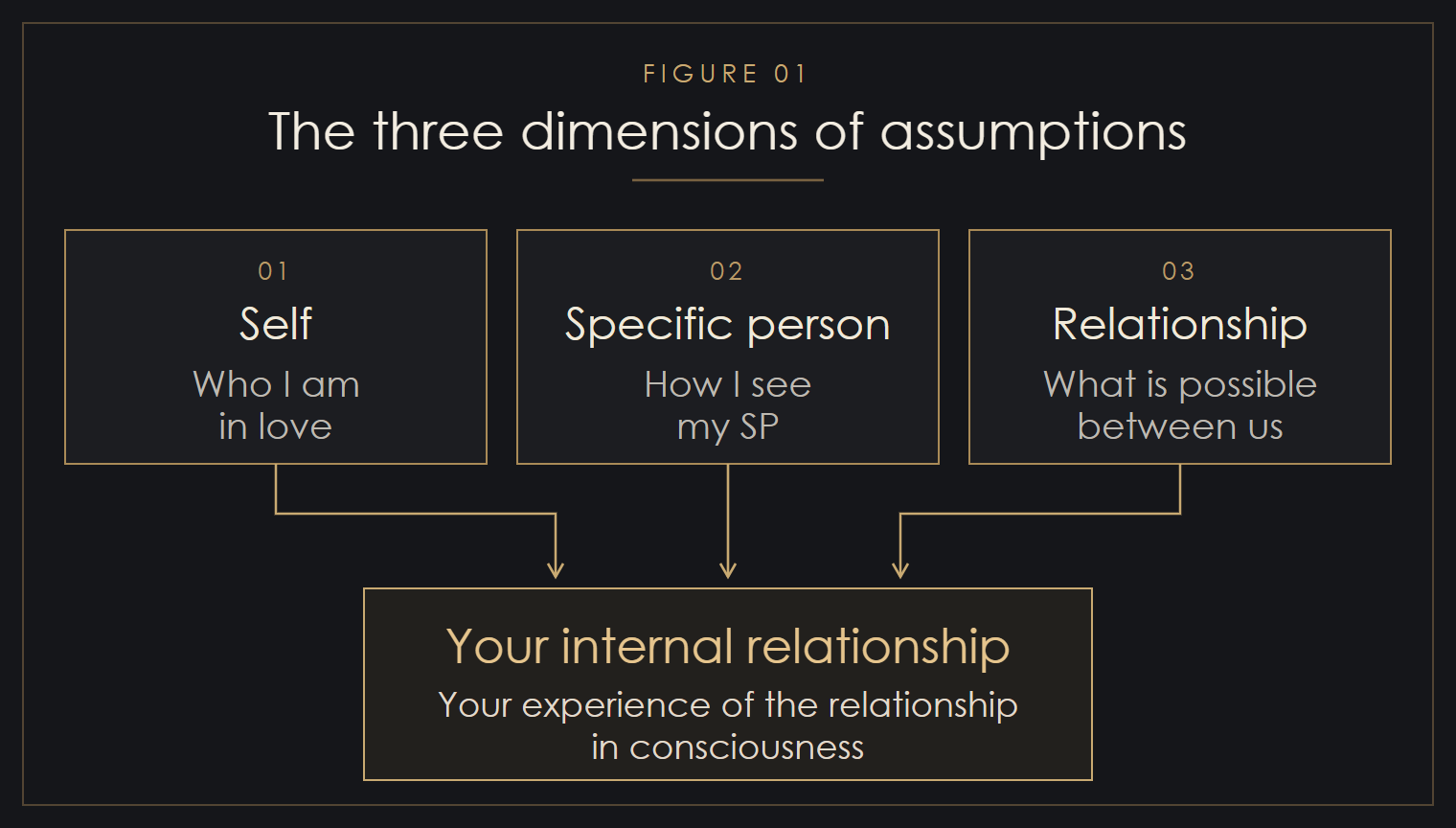
This is why the content of your imagination is only half of what matters. The position you imagine from is the other half. When I examine my inner relationship with a specific person, I look at three distinct sets of assumptions.
1. Your self-concept in relation to love and your SP
Who are you in relation to love? Do you consider yourself someone who is easily loved, desired and committed to, or does being chosen feel like something you have to earn?
You can have a strong self-concept in most areas of life and still feel deeply insecure around one particular person. You see yourself as intelligent, attractive and successful, yet something about your SP makes you wonder whether you are enough. This is why general affirmations about being attractive or worthy of love often miss the specific assumptions running your romantic life.
Self-concept is context-dependent.
2. Your concept of your specific person
What kind of person do you experience your SP as being? Emotionally unavailable, afraid of commitment, stubborn, unable to express their feelings? Notice that you can believe someone loves you while also believing they will never act on it. Those are two entirely different assumptions, and the second can quietly cancel out the first.
The explanations you keep giving yourself for your SP’s behavior are the clearest window into your concept of them. Every time you explain why they haven’t contacted you or why they avoid commitment, you reveal the version of them you are actually holding, which is often quite different from the version you are trying to manifest.
3. Your concept of the relationship itself
This is the area that gets the least attention. You can believe you are worthy of love and that your SP is capable of giving it, and still assume that the relationship between you is fundamentally complicated. Maybe the timing always feels wrong, maybe your shared history makes everything feel heavy, or maybe you expect that whenever things start going well, something will inevitably go wrong. That is a positive self-concept and a positive concept of your SP sitting alongside a negative concept of the relationship.
This is why I separate the three areas in my SP Manifestation Guide. Being told to “work on your self-concept” helps little when the assumption you are struggling with concerns your SP or the relationship instead, so before trying to change your assumptions, find out which ones you are actually working with.
Know what you are really manifesting: the relationship, not the text
Say your SP hasn’t contacted you in several weeks. Naturally, you start imagining a text from them: their name lighting up your phone, opening the message, the rush of excitement. But would you be satisfied if that message arrived tomorrow? What if you had a pleasant conversation and then they disappeared for another three weeks?
The text was never the real desire. You wanted it because of what you believed it would mean: that they were thinking about you, that they missed you, that being together was still possible. We frequently mistake the evidence of a desired outcome for the outcome itself.
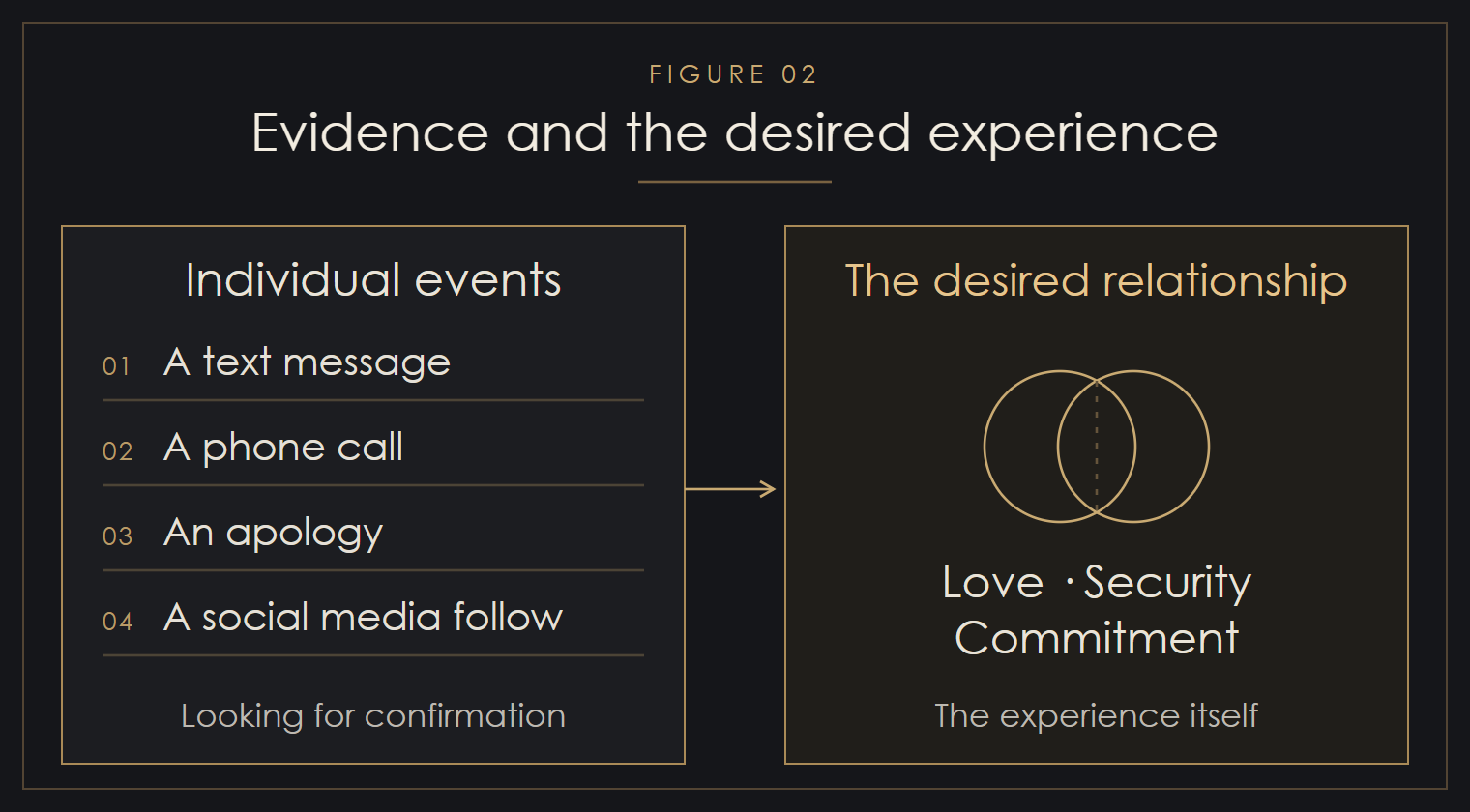
When that happens, SP manifestation turns into a string of single events (a message, a call, an apology, a follow on social media) while the relationship you actually want stays vaguely defined. And the state of someone who has finally heard from their SP is very different from the state of someone who has been in a loving relationship with them for three years. The first is still preoccupied with whether the relationship will happen; for the second, it is simply part of life.
Exercise 1: Imagine an ordinary day in the relationship you want
Most SP visualizations stop at the moment of getting together: the text, the reunion, the kiss. This exercise skips past that moment to the part you would actually be living in. It shows you whether you want the experience of the relationship or mainly the relief of being chosen, and it reveals assumptions that the dramatic scenes keep hidden. Give it ten minutes and a pen.
- Pick an unremarkable day. Not an anniversary or a reunion, but an ordinary Tuesday several months into the relationship. Decide roughly where you are: coming home from work, cooking dinner, getting ready for bed.
- Walk through it from your own perspective. Notice the small details rather than scripting a romantic scene. Do you message each other during the day? What happens when they take a few hours to reply? Who suggests plans for the weekend?
- Write down your answers to three questions: how you experience your SP, how you feel around them, and what you expect from each other. The prompts below can help.
- Compare it with today. Read what you wrote next to how you actually think about your SP right now, and mark every place where the two don’t match.
- How do you experience your SP? Affectionate, reliable, distracted, hard to read?
- How do you feel around them? Relaxed, watchful, still trying to impress them?
- What do you expect from each other? Who reaches out first, what happens after a disagreement, what feels normal between you?
Say that in your imagined Tuesday a slow reply means nothing; they are busy, and you carry on with your evening. Today, the same slow reply feels like proof that they are pulling away. That gap is an assumption you can work with, and Exercise 2 below helps you put it into words. Working out what to do with the gaps you find is a large part of what the guide walks you through.
If the scene feels flat or strangely hard to picture, that is useful information too, not a failure. And once you have a Tuesday that feels natural, keep it: it makes an ideal scene for the SATS visualization later in this article.
Why your SP manifestation techniques can keep you in the same state
Two people can use the same technique and end up in completely different states. The difference lies in what each of them is using the technique for.
Same visualization, different state
Picture two people doing exactly the same visualization. Both imagine lying in bed beside their specific person, feeling loved, wanted and secure, for ten minutes before sleep. When it ends, the first person wonders whether they did it correctly, whether their SP felt anything and how long it will take to work. The second has spent those ten minutes becoming familiar with being in a loving relationship, and simply carries on with the evening.
The scene was identical, but the relationship to the practice was not: one person was trying to produce a result, while the other was occupying a different state of consciousness.
The reassurance loop
This distinction matters because manifestation slides very easily into emotional reassurance. You notice your SP still hasn’t contacted you, so you affirm. You feel better for a while, until you start wondering whether anything has changed, check your circumstances, feel disappointed and return to your affirmations.
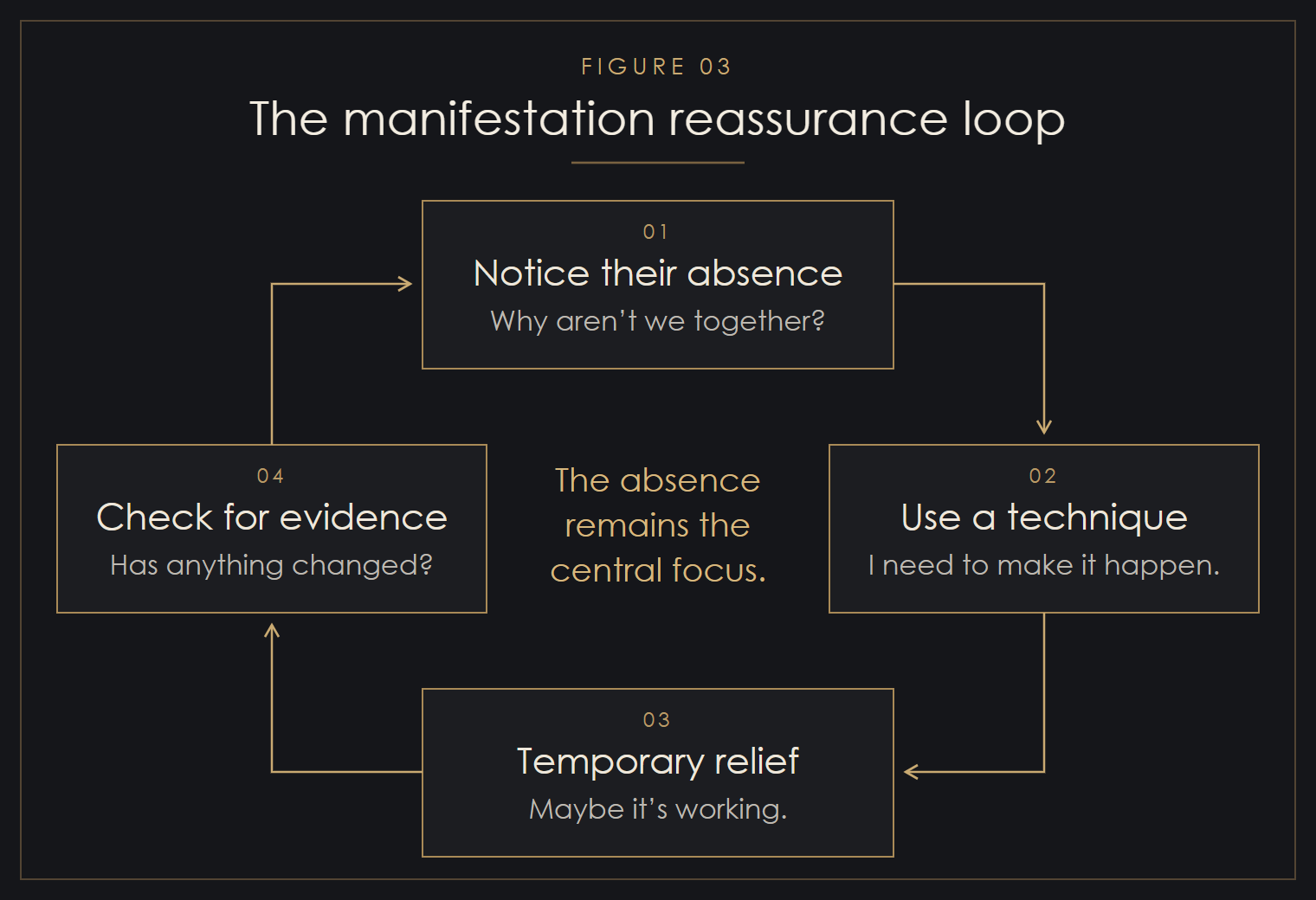
You can repeat this loop for months. The techniques relieve the discomfort of your circumstances without changing your underlying relationship to them, and the more often you run the loop, the more central your SP’s absence becomes to your day.
There is a certain irony in spending hours a day manifesting someone when, in the relationship you desire, you would have no reason to manifest them at all.
So pay attention to what you are asking your techniques to do. Are you using them to become familiar with a different experience of yourself and the relationship, or to soothe the pain of not having what you want? Sometimes the most important change to your practice has nothing to do with the technique itself.
How to change your assumptions about your specific person
People tend to underestimate what an assumption is. An assumption is something you take to be true, and once it is established firmly enough, you interpret your experiences through it without consciously thinking about it.
Imagine two people receiving the same message from a partner: “Sorry, I’m really busy today. I’ll talk to you later.” One reads it and carries on with their day; the other immediately wonders whether their partner is losing interest. Neither received any extra information. What differed was the background of assumptions each person read the message through, which is why the conclusions you reach automatically reveal so much about your current state of consciousness.
This is also why Neville put such weight on naturalness. An established assumption doesn’t announce itself through an intense emotion or a deliberate thought; it operates so naturally that it simply appears to you as the way things are.
Exercise 2: Uncover your assumptions about your SP
Complete these sentences quickly, writing what actually comes to mind rather than what you think you are supposed to say:
- Deep down, I think my SP sees me as…
- The reason we aren’t together right now is…
- Even if we got together, I would probably worry about…
- Being chosen by this person would prove that…
The last one matters most. Sometimes being chosen by a specific person takes on a significance far beyond the relationship, becoming tied to your attractiveness, your worth or your ability to be loved. Once that happens, your desire is no longer only about experiencing a relationship: part of your identity now feels as if it needs the manifestation to resolve it, and that changes your whole emotional relationship to the desire.
Identifying an assumption and changing it are separate processes. Some assumptions are fairly superficial, while others are bound up with experiences and beliefs you have carried for years, and they call for different approaches. I go into this in much more depth in the SP Manifestation Guide, especially how to find the assumptions beneath your recurring thoughts and how to work with different kinds of inner resistance.
Which manifestation technique should you use for your SP?
There is no universally best technique for manifesting a specific person. A technique is only as effective as the job you give it.
| Technique | What it is for |
|---|---|
| Affirmations | Introducing an alternative assumption |
| SATS and visualization | Becoming familiar with the experience of the desired relationship |
| Inner conversations | Changing how you habitually relate to your SP in imagination |
| Revision | Changing your inner relationship with past experiences |
| Mental diet | Recognizing and reconsidering recurring assumptions |
The techniques overlap, and you don’t need all of them. If you keep having imaginary arguments with your SP, inner conversations are a sensible place to start. If you struggle to imagine what a secure relationship with them would feel like, SATS (a state akin to sleep) gives you a way to explore that experience. And if you interpret everything through the lens of a painful breakup, revision lets you build a different inner relationship with that experience without denying what actually happened.
Whatever you choose should address something specific in your current state. Someone who feels undeserving of love is working with different assumptions from someone who believes their SP is incapable of commitment, and handing both of them the same routine ignores that difference. Matching the practice to the assumptions you actually hold is the core of how I approach SP manifestation in the guide.
A simple SATS visualization for manifesting your SP
- Relax before sleep and imagine a short, ordinary moment that would naturally belong to your desired relationship: sitting on the sofa together deciding what to have for dinner, or waking up beside them on a Sunday morning.
- Keep it mundane. The scene doesn’t need to be romantic or emotionally overwhelming. I actually prefer mundane scenes, because they imply the relationship has already become an ordinary part of your life.
- Stay in your own perspective for a few minutes, noticing the familiarity of their presence and how you experience yourself around them.
- Let it go. Fall asleep or carry on with your evening, and resist the urge to grade the visualization afterwards.
What living in the end looks like when you manifest a specific person
One difficulty with the instruction to “live in the end” is that people read it as something to maintain actively all day. Every thought must match the desired relationship, and any sadness, doubt or frustration has to be corrected the moment it appears.
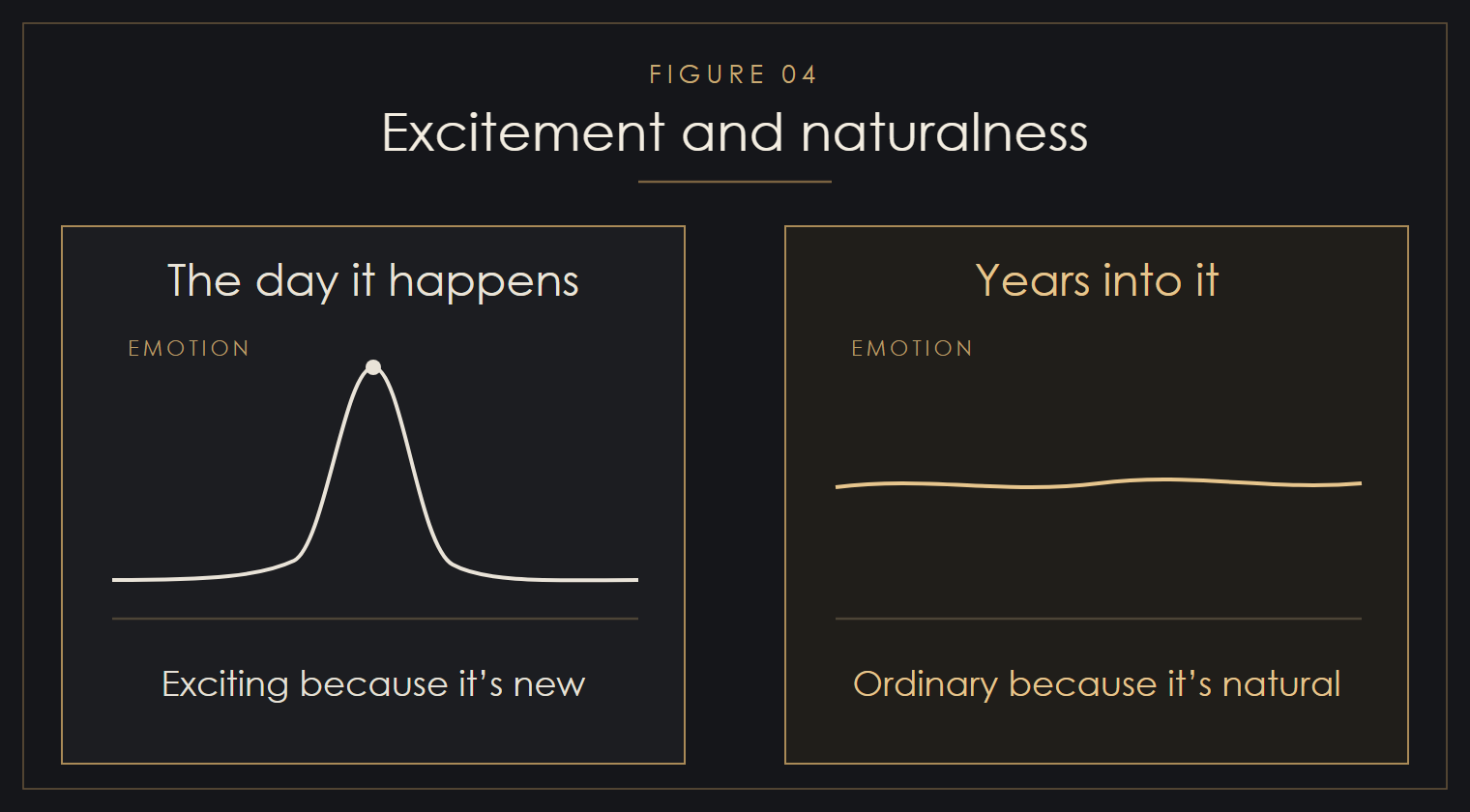
But think about how you relate to something you already have. You don’t spend your day reminding yourself that you have it or generating the emotions of possessing it; you relate to it as an established part of your life. That is what naturalness means here. Neville’s feeling of the wish fulfilled is often misread as a demand for emotional intensity, yet something can feel entirely real to you without producing much emotion at all.
Compare imagining a million dollars landing in your account tomorrow with imagining checking your balance after ten years of being wealthy. The first is exciting because it represents an extraordinary change in your circumstances; the second is ordinary because wealth has become natural to your identity. The same distinction applies to relationships.
The question to ask yourself today
If you felt completely secure about your desired relationship, what would you no longer feel the need to do today?
Perhaps you wouldn’t spend an hour reading SP success stories, check when your SP was last online or hunt for a new technique every time your circumstances disappointed you. Living in the end often involves far less activity than people expect.
Persistence vs detachment: do you need to detach from your SP?
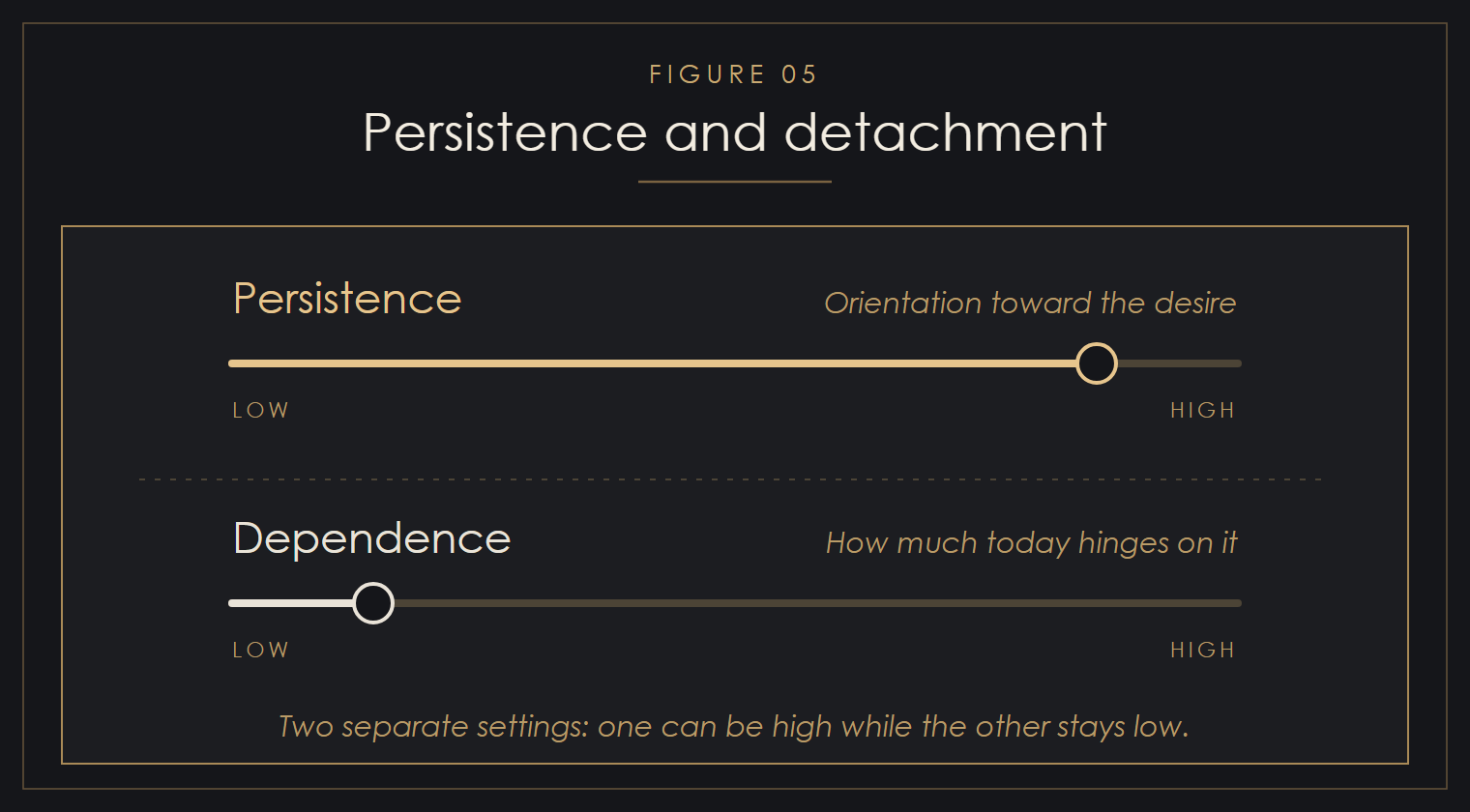
Persistence and detachment are two of the most misunderstood ideas in manifestation. If you want something, why detach from it? And if you detach, how do you persist? The contradiction disappears once you see that they concern two different aspects of your relationship with the desire:
- Persistence is your inner orientation toward the desire.
- Detachment is how far your present wellbeing depends on its fulfillment.
That means you can want a relationship with someone while still enjoying the life you are living now. You can hold an assumption of possibility without spending the whole day wondering when your circumstances will change, and you can care deeply about someone without organizing your emotional life around what they do next.
Attachment disguised as persistence
One kind of attachment is especially hard to recognize because it disguises itself as persistence: the constant need to do something about your manifestation. Another affirmation, another visualization, another video about what you might be doing wrong. Eventually, being someone who is manifesting a specific person becomes an identity of its own, and because so much of your day revolves around it, what you grow most familiar with is the experience of trying to get the relationship.
The aim of manifestation is to become familiar with the desired state. Constant preoccupation with the process of reaching that state can have the opposite effect. It’s also why the guide is built around a practice that suits your situation rather than an ever-growing list of techniques.
How to handle the 3D when your SP seems uninterested
In manifestation communities, “the 3D” means your presently observable circumstances, and you will often hear that you should ignore it. But what does ignoring it mean when your SP hasn’t contacted you for three months, is in another relationship, or has told you plainly that they aren’t interested?
Observation vs interpretation
Your circumstances are your circumstances. Acknowledging them doesn’t require treating them as a permanent truth about your future, because what has happened and what you conclude must always happen because of it are two different things. Compare these two statements:
- “My SP and I are currently separated.”
- “My SP and I will never be together because we are currently separated.”
The first describes a circumstance; the second adds an assumption about the future. Much of the work lies in noticing where your observation ends and your assumption begins, since people routinely read more into their circumstances than those circumstances contain.
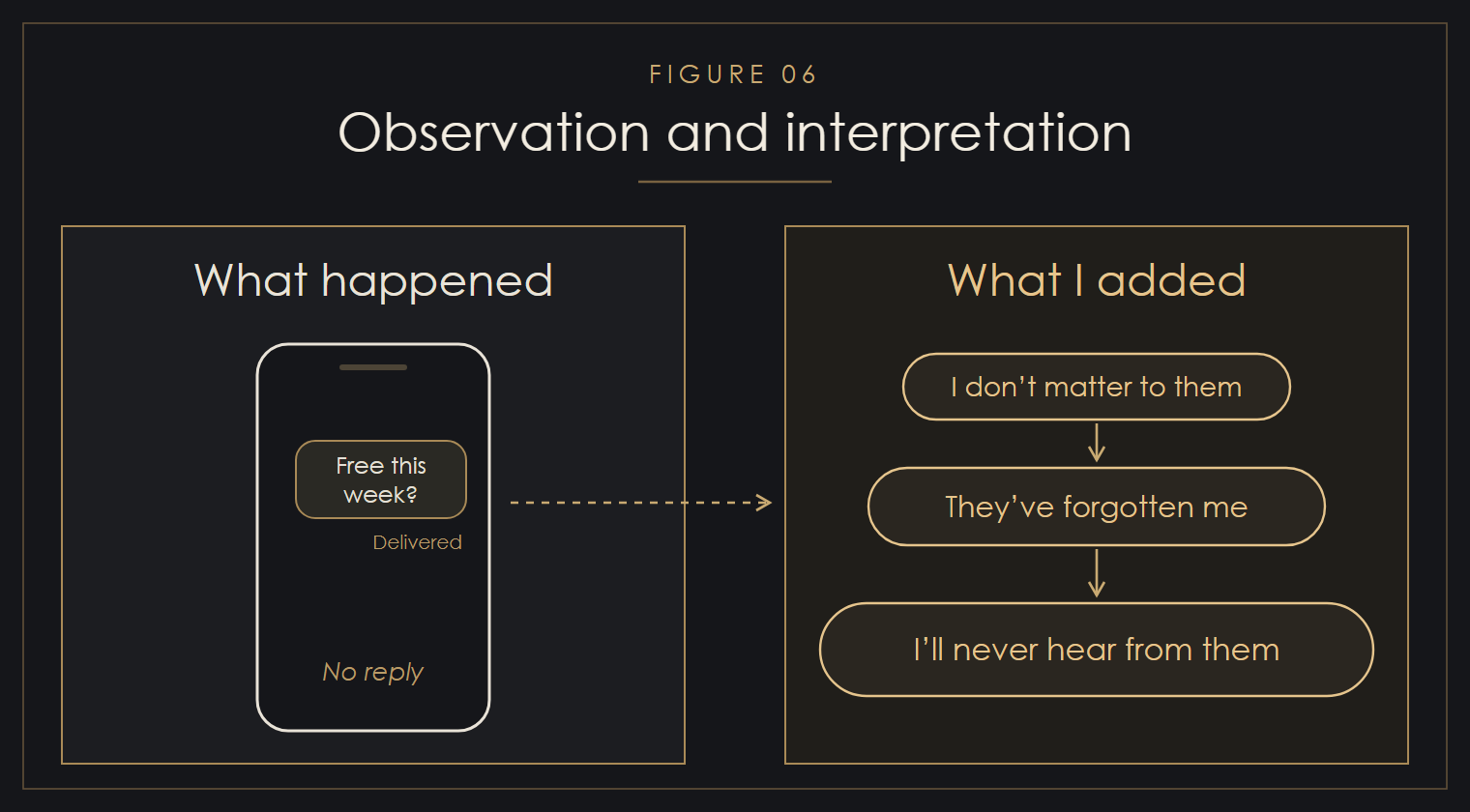
Someone hasn’t replied to your message: that is an observation. They haven’t replied because you don’t matter to them, they have forgotten you and you will never hear from them again: that is a chain of interpretations.
You don’t need to replace every uncertain situation with an elaborate positive story either. Sometimes you simply don’t know what something means, and you can let that uncertainty stand without filling it with the worst interpretation available.
What about taking action?
The Law of Assumption doesn’t require you to become passive. You can communicate, make decisions and respond naturally to opportunities, as long as your actions stay appropriate to your circumstances. Another person’s expressed wishes and boundaries deserve respect regardless of the assumptions you choose to explore privately.
When to reconsider manifesting a specific person
Finding it hard to imagine how a desire could be fulfilled is, by itself, a poor reason to give it up. But it is worth examining the relationship between your specific person and the experience you want to share with them.
Suppose your original desire was a loving, intimate and mutually fulfilling relationship. Over time, being chosen by this particular person has become so important that you would accept a relationship in which those qualities were largely missing. What happened to the original desire? The importance of the person has gradually eclipsed the importance of the experience, and that deserves special attention if you notice yourself lowering your expectations simply because you are afraid of losing the possibility of being with your SP.
Keep the qualities of your desired relationship at the center of your practice. Being respected, loved and genuinely wanted by them is part of what you are manifesting. And if your feelings change along the way, you are allowed to reconsider what you want.
FAQ: manifesting a specific person
Short answers to the questions that come up most often about manifesting a specific person.
How long does it take to manifest a specific person?
There is no reliable timeline. The question itself often comes from the waiting state described above: counting days keeps your attention on the absence of the relationship rather than on growing familiar with it.
Can you manifest a specific person who is in another relationship?
Within the Law of Assumption, a current relationship is a circumstance rather than a verdict on the future, so the inner work is the same as in any other SP situation. What changes is your outer conduct: their present relationship and their choices deserve respect, whatever you choose to assume privately.
Can you manifest your SP without contact?
The work described here takes place in your inner relationship with your SP, so it doesn’t depend on contact. Nor does the Law of Assumption require you to go no contact; you can communicate naturally wherever that is appropriate.
Does manifesting a specific person override their free will?
That is a metaphysical question nobody can settle, and manifestation has not been shown to control another person’s choices. What you can work on is your own state of consciousness, which is where this approach puts its focus.
Putting it together: where to focus when you manifest a specific person
If I were starting to manifest a specific person today, I would spend less time collecting techniques and more time understanding the inner relationship I already had with them: how I saw myself, how I saw them and what I believed was possible between us. I would get clear on what I actually wanted to experience in the relationship, then choose a practice that helped me become familiar with that experience.
Along the way, I would watch whether my assumptions were genuinely changing or whether I was just getting better at repeating different thoughts. And I would keep living my life.
Coming soon
The SP Manifestation Guide
If you want to work through this in a more structured way, the guide develops these ideas much further: identifying your underlying assumptions, working with resistance, changing your inner relationship with your SP and building a manifestation practice suited to your situation.
I wrote it for people who already know about affirmations, visualization and living in the end but still struggle to combine them into a coherent practice.
Ultimately, the goal is to stop experiencing yourself as someone trying to manifest a relationship. Consider what it would be like for love to feel natural to you, and for the relationship you desire to no longer seem so extraordinary. The more familiar that inner experience becomes, the less your practice needs to revolve around your specific person’s absence, and that is where I would direct my attention.

3 comments
Comments are closed.